Specsheet
A good shutdown protects the machine, not just the calendar. If we leave CNC routers, lasers and mills in a clean, dry state before the December break, January starts faster and with fewer surprises. Summer heat, dust and humidity can work against idle machines. A proper routine keeps rust, sticky slides, flat batteries, blocked filters and forgotten settings out of the first week back.
By Mr Velaphi Ramoroka, MD, Equipment
Before the final day, finish the jobs that can be completed cleanly and park the rest in a safe state. Save current programmes, note tool lengths, zero points and any settings that may be needed again in January.
We also clear the bed, table and surrounding floor so nothing is left to attract dust or get knocked during the break. That includes offcuts, jigs, coolant bottles, labels and loose consumables.
Dust and chips left in corners turn into grime while a machine sits unused. We vacuum out enclosures, wipe rails and guards, clear extraction paths and clean around fans, limit switches and cable runs.
On routers and mills, we pay attention to the table, spindle nose, vises, tool holders and splash areas. On lasers, we clean the cutting area, lens access points, tray edges and any places where fine soot can build up.
After cleaning, moving parts need a light protective layer where the manufacturer allows it. We lubricate guideways, check way oil levels, grease the right points and make sure nothing is left dry before the shutdown.
Belts, hoses, couplings and seals get a quick visual check too. If a part is cracked, leaking or loose now, it is easier to sort before the machine stands still for weeks.
Shutting off in the correct order matters. We stop the programme, home or park the axes if required, switch off the control system, then isolate the main power according to the machine setup and workshop procedure.
Do not leave accessories half on, batteries half charged or compressed air systems under strain if the machine will be idle. If the machine uses a chiller, compressor interface or extractor, those items should be dealt with in the same shutdown plan.
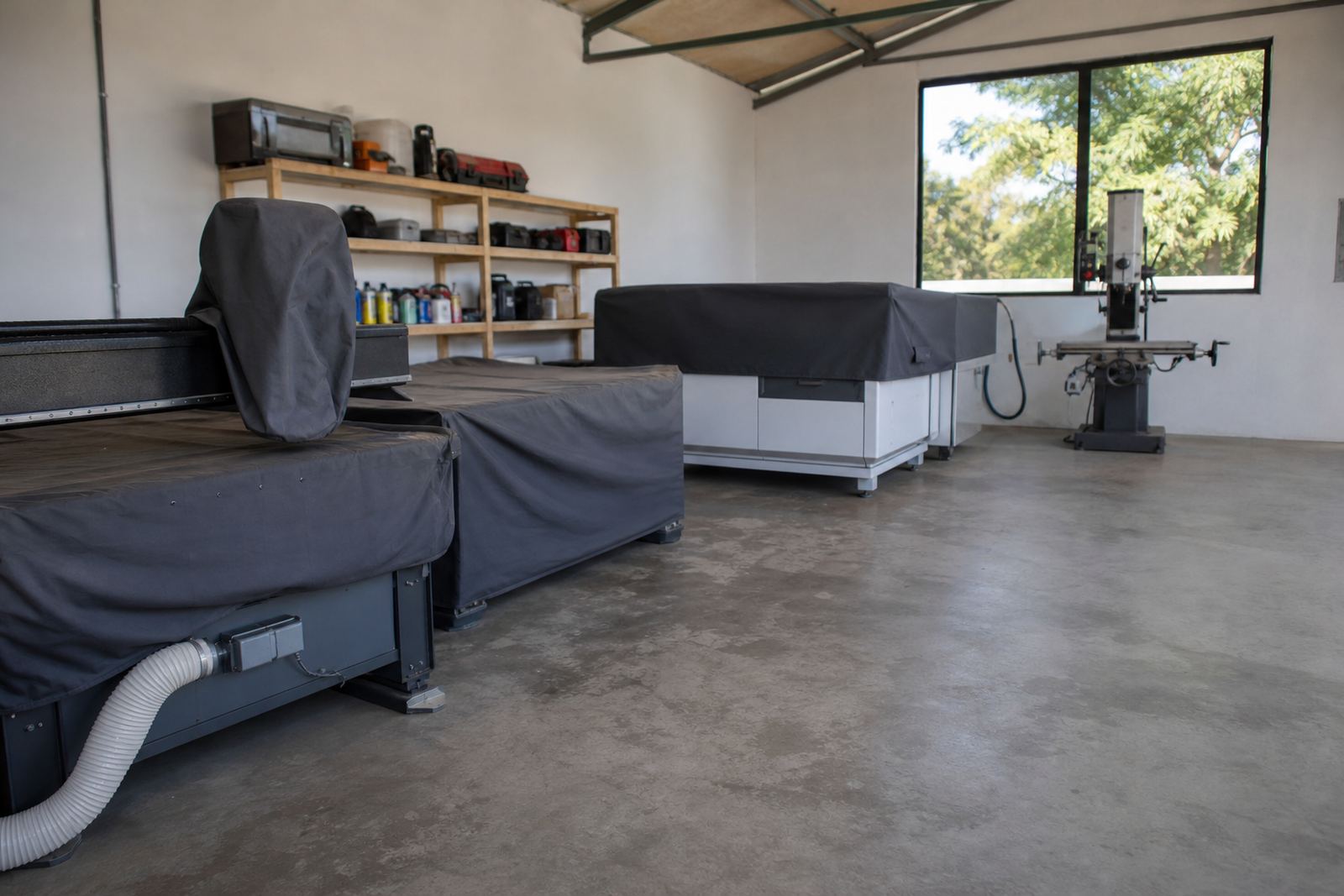
A machine cover should keep off dust without trapping damp inside. Breathable covers are better than plastic sheets that hold moisture against painted and machined surfaces, especially in a warm South African summer.
If the workshop is prone to humidity, we also keep the room tidy and dry. Desiccant packs, sealed drawers and raised storage for tooling help a lot, and extraction filters should be left clean rather than loaded with dust over the break.
Our first-day-back checklist is short, but it catches the problems that matter. We inspect cables and air lines, check lubrication, confirm guards and extraction are in place, then jog axes slowly before the first real cut.
If you are planning a new machine, a bay upgrade or a shutdown routine that fits your workshop, we can help with the right setup from equipment and the right working layout in our bay options, or through our contact form.
Should we leave the machine unplugged for the whole break? Where the machine and site procedure allow it, full isolation is usually best for a long shutdown. Keep any backup batteries, controllers or attached systems in their recommended state, not just switched off at random.
Do we need to oil every machine before closing up? Only the points that the manufacturer specifies, using the correct product. Too much oil can attract dust, so the aim is protection, not soaking everything.
What is the most common January restart mistake? Starting the machine before checking dust, lubrication and cables. A quick visual inspection and dry jog saves time and reduces damage on the first day back.
Continue with equipment, bays, or use our contact form.
Verified Google reviews