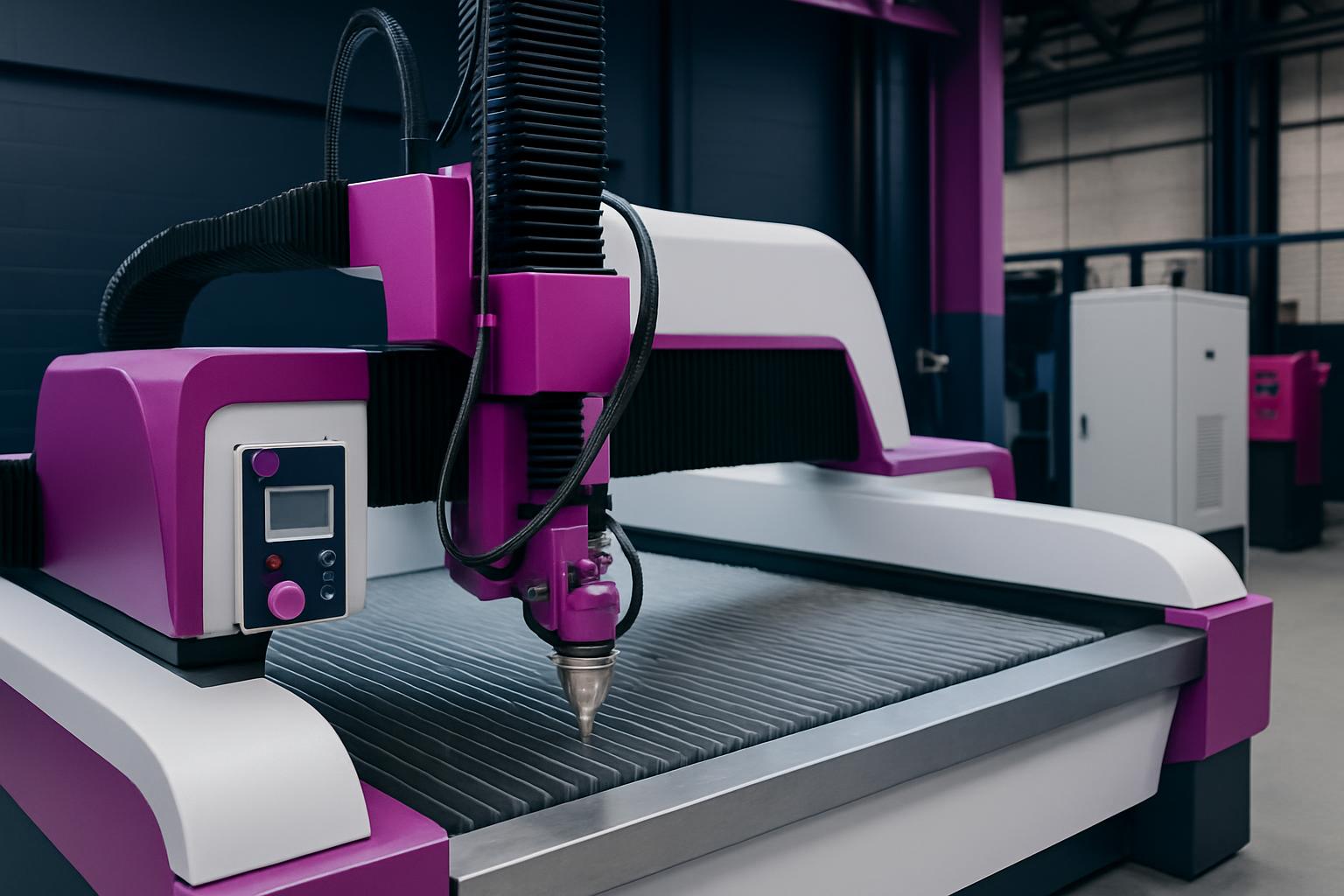
Here’s the practical service handoff for Feature Waterjet Bay, focused on smooth shift changes and keeping South African shop floors stable and ready.
See support and handoff form. Email equip@featureequipment.co.za.
Also see specsheet notes and projects.
Feature Waterjet Bay service is designed for production teams who want their machine to work as part of a real shift, whether that’s in Germiston, Gqeberha or a coastal park facing morning damp. If your plant still relies on named leads to keep the bay running, not just an internal ticket, this handoff fits. It does not suit shops chasing brochures or expecting hands-off automation stacks. We cut the fluff and give you working bay notes, care cues, and a card that tracks the actual bottlenecks you face between crib, power cuts, and missing parts.
Shops with shared or multi-use equipment will benefit most. If your team needs quick, repeatable handovers and a way to log service or blockers without paging through a twenty-page PDF in the dark, this is written for you. If your operation is already running full automation, or you're just collecting spec sheets for a future purchase, the Feature Waterjet Bay specs or the equipment overview may suit better.
We start with the production lead. You define the main blocker in one sentence, high dust, power cuts, missing nozzles, or something else, and we match the care routine and bay card to it. Every service pack is localised for common issues in Gauteng, Durban and Cape Town: load-shedding, Highveld dust, coastal humidity, municipal limits, or three-phase quirks. The result is a printable, crib-sized card and a care checklist that does not vanish when the power goes out.
Each service pack arrives with a short set of decisions that need a named owner, a clear bay card, and a brief for the next shift. No more scrambling at 6:10am when the Monday team finds a missing collet or a water filter left open. By keeping the paperwork as short as possible, we make sure the core details survive in actual use. If your shop works with older teams or in a mixed language environment, the cues stick, they reference plant terms and suburb names your people know.
Let’s say you run a shop just outside Bloemfontein. Your team is about to switch shifts during a week with two days of load-shedding. The bay card (filled out by the outgoing shift) notes: 'Main risk is Highveld dust in the pump filter. Don’t skip filter check after cut.' The incoming crew sees the same warning on the one-page card clipped to the machine, so they know to check and keep a spare filter in the crib.
A care cue, like a handwritten tray for missing collets, gets included as a stub note so nobody has to restart the check-in routine. By day three, the lead can email equip@featureequipment.co.za with a quick update or a new blocker sentence, and it’s picked up by the Sunnyrock team without repeating the whole week’s story. That’s how the handoff survives South African work, on real details, not just hoping for the best.
Before you email equip@featureequipment.co.za, prepare three things for a quick reply. A short blocker sentence explaining where production slows or skips, your city or plant location (so we can match local cues), and which part you already checked (specs or service). That way, a team member can pick it up on-site or during a showroom hour without back-and-forth.
Be ready to name an owner or lead for service tracking. If you work from a mixed-use yard or share bays, clarify who closes down and who preps the first shift. If you’re not sure which bay card you need, see the Bays page or review typical projects in the projects section.
Don’t ignore the first photo on day two, skipping this step leaves the next shift guessing and slows down production. Avoid over-complicating the card system; too many forms buried in a folder won’t survive a busy week. Make sure every care cue matches actual jobs, not theory.
It’s easy to forget naming an owner for follow-ups, but that's usually why a bay falls behind. If you’re stuck, reading the specsheet note helps match your language to what your team will hear in a review. Only widen the scope to other equipment or bays after you’ve locked down a working service path here.
equip@featureequipment.co.za · Sunnyrock, Germiston