Waterjet sample
Feature Waterjet Bay is a practical benchtop waterjet path for shops needing cold, burr-free sample cuts in plastics or metals. Tested for South African plants with real power, dust and shift handover needs.
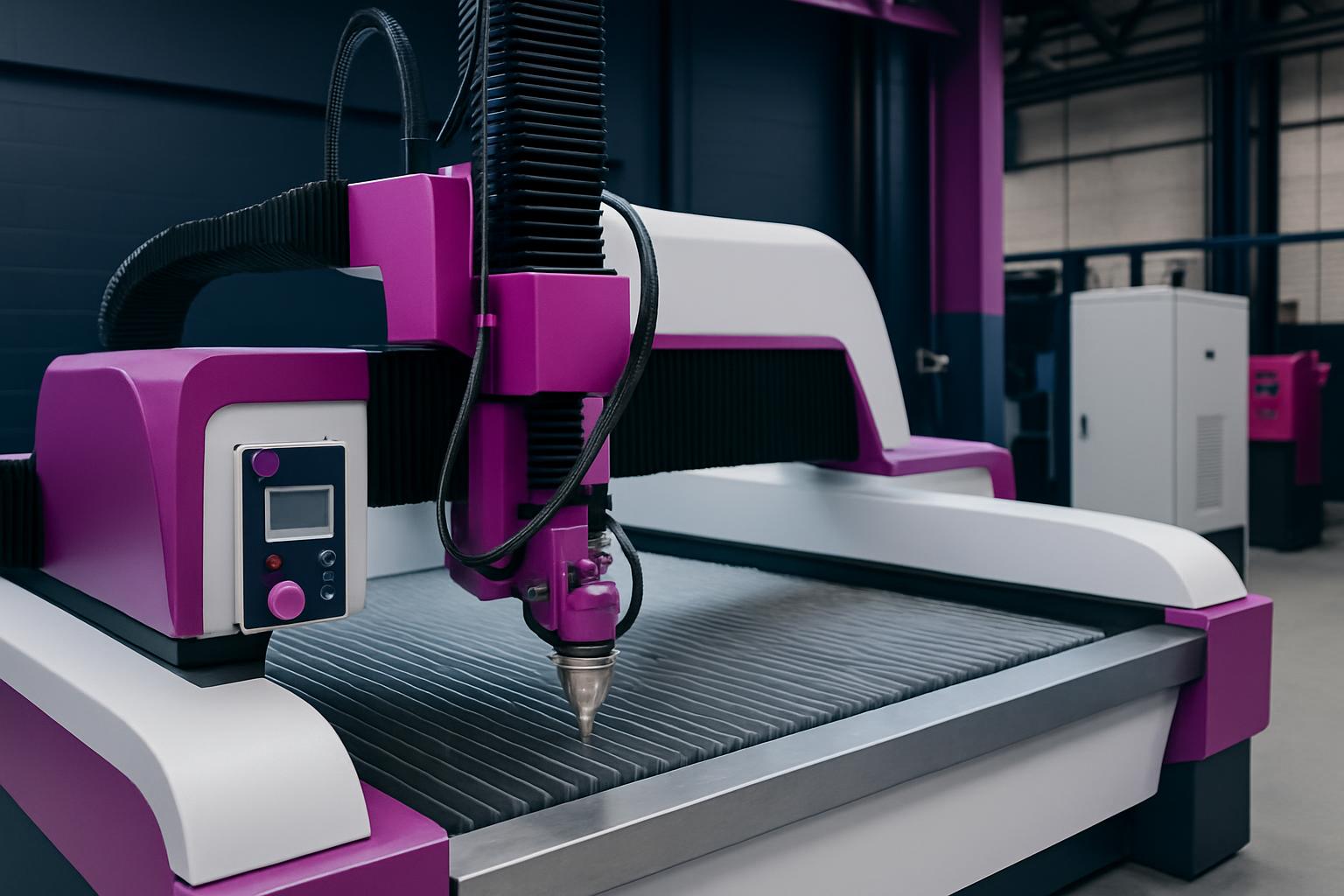
Sample bays choose waterjet when plastics and metals need clean edges without burn.
| Pressure | Equipment class |
|---|---|
| Abrasive | Garnet cue |
| Catcher | Service leaf |
| Ideal for | Samples |
| Lead | Stock Gauteng |
| Care | Nozzle + garnet |
A benchtop waterjet bay fits teams needing clean, cold cuts in sample runs, test pieces or short jobs where a laser or plasma would scorch or leave a heat-affected zone. South African shops working with plastics, composites, rubber, aluminium and exotic metals pick waterjet when edge quality matters more than fast cycle times. This bay does not suit high-volume panel shops, thick mild steel, or operators who need full sheets finished in one go. Here, the path is simple: sharp, unburnt, accurate samples from real offcuts or stock.
If your floor is in Germiston, Cape Town, Durban or any high-dust zone, the water and abrasive catchers are sized to survive a typical shift, not just showroom conditions. The bay design assumes shared use, with practical cue cards and short handoff notes so every operator can complete the run. See Feature Waterjet Bay specs for pressure, abrasive type and maintenance intervals.
Feature Waterjet Bay is built for floors where the production lead still calls the shots. The kit gives you a clear, printable checklist, care cues, and a one-page bay card. Every pack includes a handoff note for emailing updates to equip@featureequipment.co.za. This covers the basics: where the nozzle, garnet and catchers are kept, which sample is next, and any bay-specific reminders like garnet level checks before load-shedding.
Most weeks in a typical Gauteng or coastal shop, the first operator needs to check the nozzle, set pierce height with a simple lock, and align stock. All missed consumables (collets, catchers, filters) are listed with their bay position so the Monday shift never starts by hunting parts. The waterjet path is kept short and concrete, not a twenty-page manual. Where possible, we include local names and plant references for the shift handover.
You have a client needing a prototype in 6 mm acrylic and 3 mm stainless. Laser won’t do, the spec calls for no burn or tint. You drop the sample sizes into the bay’s card, confirm garnet stock and inspect the catcher filter (Highveld dust is always a risk), then align the stock on the benchtop path. The bay’s care notes walk you through pressure and nozzle checks. You cut both test pieces, rinse the catcher, and record sample handoff by emailing equip@featureequipment.co.za. No extra forms, no waiting for a paper trail.
On the next shift, the operator finds your bay card, reviews last issues (for example, a worn filter or pressure cue), and continues the next batch with no downtime. You keep jobs moving, even under load-shedding or when teams rotate between Feature Waterjet Bay and Feature Mill 3-Axis or Feature Engraver Pro.
Before you email equip@featureequipment.co.za, gather a simple list. Start with your most common sample materials and dimensions. List any ongoing issues with heat, edge finish or missed deadlines. Note your plant’s main risks, local dust, three-phase limitations, water restrictions, or crib routines, and your team’s preference for bay or shift handover.
This detail shapes the advice you get back, and speeds up the quote or install. The more specific the info, the more likely you’ll land a support routine that fits your shop, not just the next glossy machine.
Too many teams in Gauteng and on the coast pick a waterjet because the catalogue promises 'no heat affected zone', but forget to plan for abrasive catcher cleaning or nozzle care under city water restrictions. Plant floors that ignore Highveld dust end up with blocked filters, and sample bays that skip written handoff find jobs stuck between shifts.
Avoid sending vague lists or forgetting the real blocker, missing consumables, incomplete sample notes, or unclear shift roles. Each bay runs best with a single-page card and a named shift owner. If you prep your enquiry and run sample jobs to the card, waterjet bays become part of your plant’s pay-the-rent path, not a maintenance problem.
equip@featureequipment.co.za · Sunnyrock, Germiston