Specsheet
Getting the right stub size and airflow in your extraction ducting is critical for effective dust removal and filter life. Poor sizing wastes filters and allows fines back into your workspace.
By Ms Nomsa Khumalo, MD, Dust
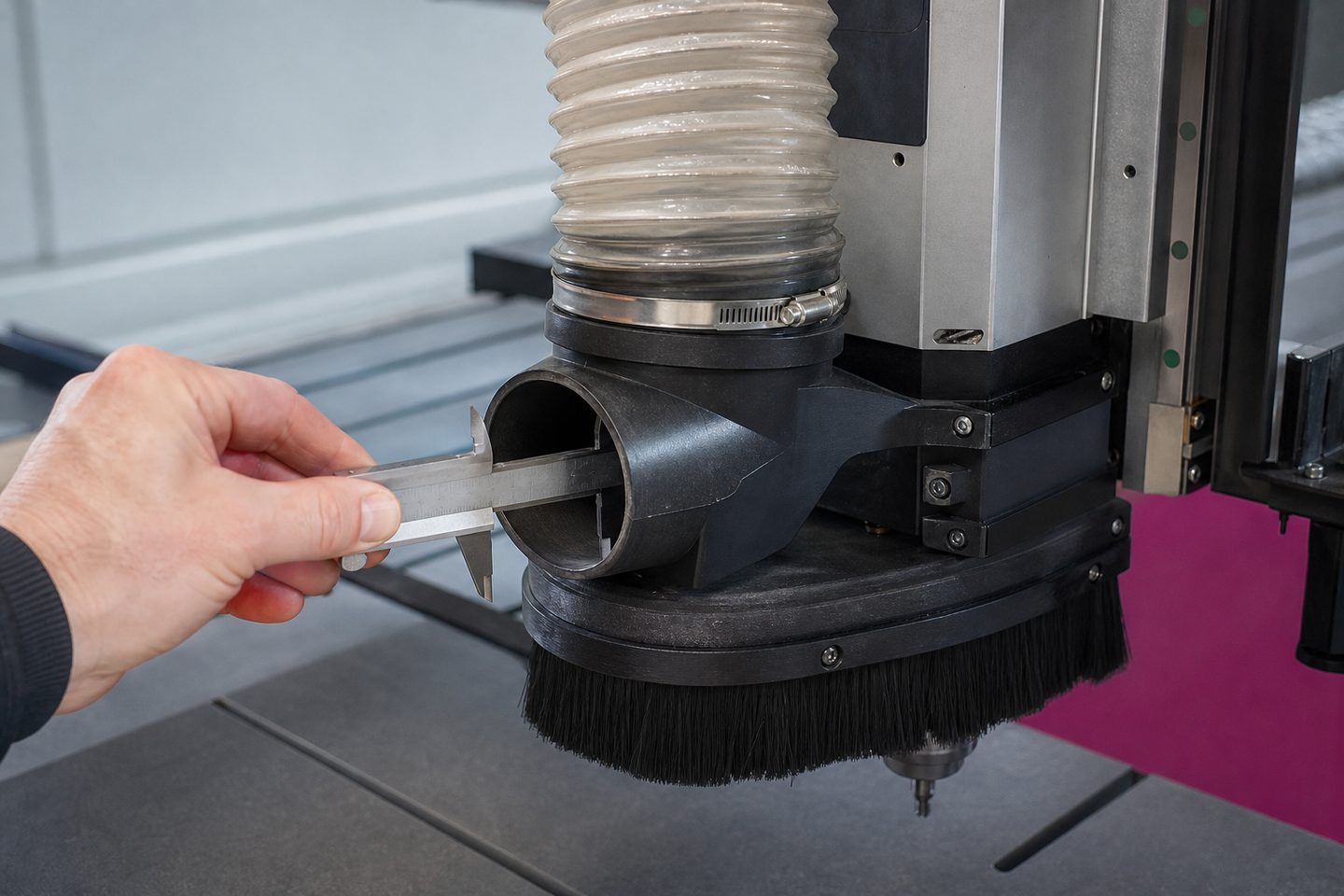
Stub size is the diameter of the branch duct that connects a machine’s dust port to your main extraction line. Airflow is how much air your system can move through that stub per second or minute. If your stub is too small, it throttles airflow, letting dust settle in the duct or escape the capture hood. If it’s too large for the fan or system, air velocity drops and fines drop out along the line.
Correct sizing means you remove dust at the source with enough air speed to keep chips and fines moving all the way to your extractor. This keeps your filters clean longer, reduces dust exposure under the Regulations for Hazardous Chemical Agents, and prevents fines from blanketing surfaces or fouling nearby machines.
Follow these steps when planning or checking extraction in your workshop. This applies to routers, engravers, plasma tables, and any machine that produces shavings or dust.
If you are unsure about your duct runs, airflow or extraction performance, our team can help you assess your setup. Ask us to check if your stub is matched to your machine and extractor, or if your filter is adequate for your dust load.
It’s also worth asking for advice if you plan to add more machines to your ducting, or if your shop has fine dust that stays airborne after extraction runs. Ms Nomsa Khumalo and our installation team can check filter stage options and recommend staged-filter units like the Feature Dust Cell for wood, MDF, and fine metal dust.
We often see stubs necked down below the machine’s port size, or long runs of flexible hose that choke the system. This cuts airflow sharply, and dust will settle in dead spots or blow back at the operator, both are unsafe and can damage your extractor.
Another mistake is running too many open stubs on a single extractor, which drops the air speed below the 20 m/s you need for dust transport. Remember, sweeping or compressed air does not solve dust buildup: you must capture at the source with well-sized stubs and good airflow.
Continue with equipment, bays, or use our contact form.
Verified Google reviews