Extraction
Feature Dust Cell is a staged-filter extraction bay built to control dust and fine particles from routers, engravers and small laser machines in South African workshops.
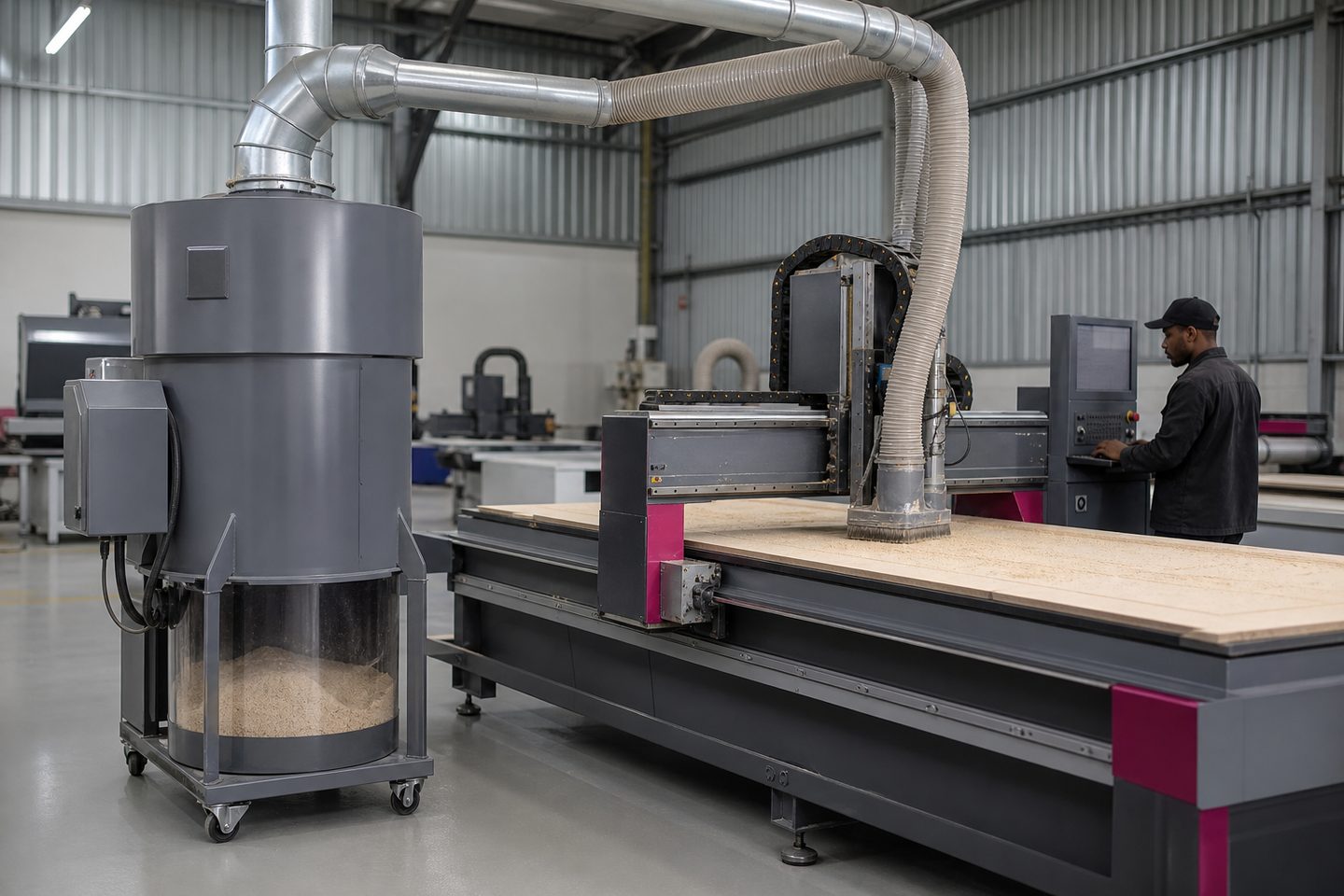
The Feature Dust Cell is a multi-stage filtration unit designed to capture dust and fine particles directly at the source. It is ideal for workshops running CNC routers, desktop engravers or laser marking cells where cutting, engraving or marking creates nuisance dusts or light fume.
The system is compact, suitable for bays where teams must share floor space between machine work and assembly. It is not meant for heavy plasma tables, metal grinding or solvent-rich processes, but is effective on wood, MDF, composites, light metals and acrylic.
The Dust Cell is sized for typical South African CNC router beds up to 1,200 x 1,200 mm and desktop engraving stations. It handles fine wood dust, MDF chips, plastic shavings, acrylic fume and the light particulate from laser marking most non-ferrous metals.
For jobs involving deep cutting in resin, large volumes of fibreglass or dense composite dusts, a larger extraction system may be needed. The intake can be fitted with different stubs or ducts to match your machine’s outlet and work envelope.
You need a stable 230 V single-phase outlet for the extraction bay, checked by a registered electrician. The cell must be positioned close to the main dust source, ideally within 2 metres of the router or engraver, to minimise duct losses.
Clear floor space for the unit plus access for filter changes. Plan for regular cleaning and have a spare filter stage ready in your tool crib. Workshops in coastal areas like Durban or Gqeberha should monitor filter changes closely, as humidity affects dust load and filter life.
If you are wiring in a new circuit or plug, make sure your electrician issues a Certificate of Compliance. Extraction performance drops if the intake is too far away or the duct leaks, so check all joints.
In a Joburg sign shop using a Feature Router 1212 for MDF and acrylic jobs, the Dust Cell sits just behind the bed, stubbed directly to the router’s dust boot. The staged filters trap both fine wood dust and the lighter fume from acrylic engraving.
Operators start extraction before powering up the spindle, and filter status is checked at shift change. The team keeps a labelled filter stage pack in their Feature Tool Crib for quick swaps, usually before the first shift on Mondays.
The biggest issues are blocked filters from neglect, using the wrong filter stage for material, or placing the cell too far from the cutting source. If the cell is too close to a wall or under a bench, airflow drops and dust escapes the hood.
Avoiding these starts with a regular filter change routine, using only the correct filter packs, and checking the intake and ducts for leaks. Never run the router or engraver without extraction, as this allows dust to spread and increases fire risk.
Verified Google reviews