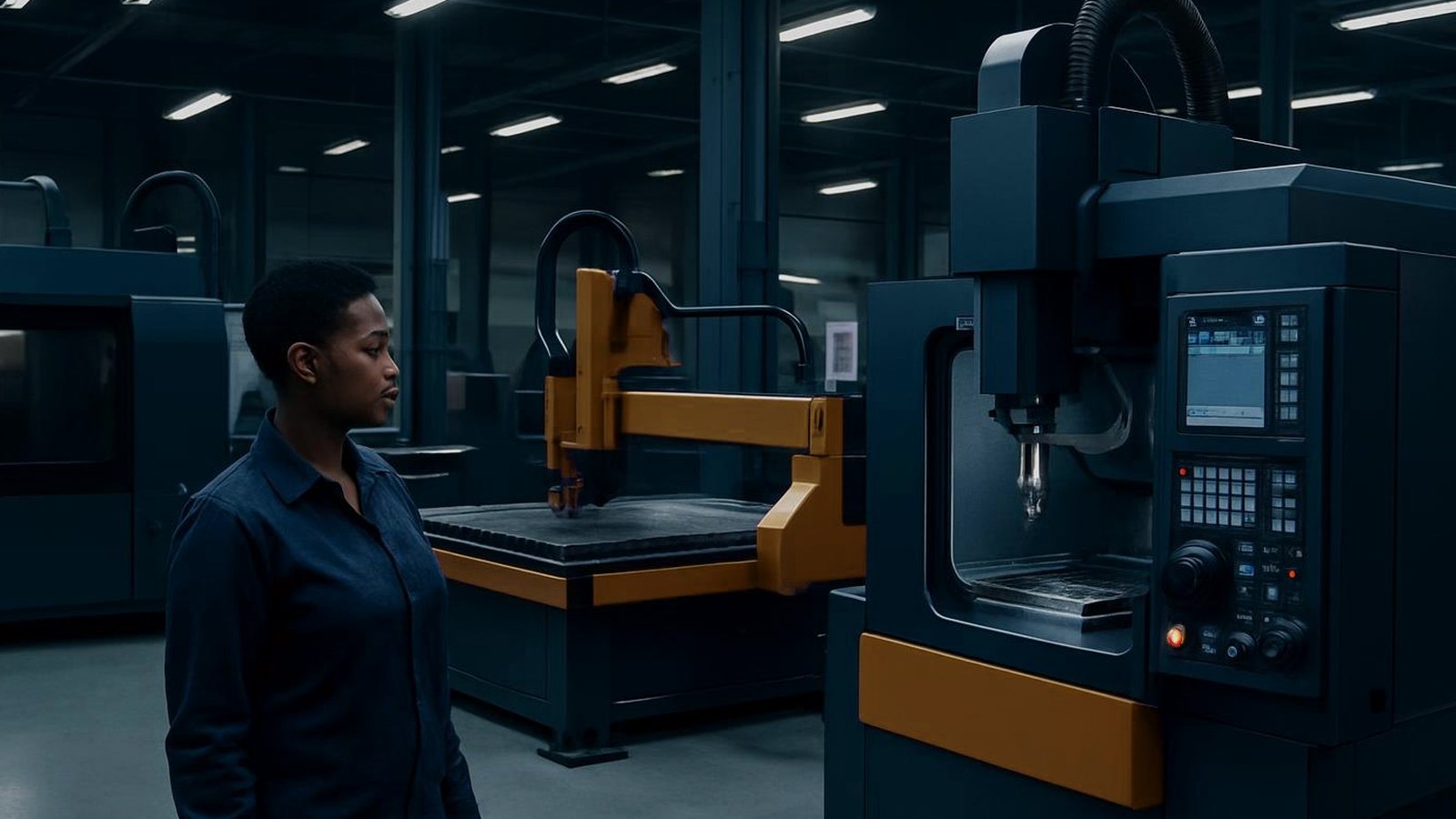
Bay
Set up for shops cutting, marking and finishing light metal sheet, this bay brings together precision, smoke control and the right tools for repeat jobs in steel, aluminium or stainless.
Read the related specsheet notes and printable resources before you order.
Light metal fabrication is about repeatable, neat results on sheets up to 3 mm in mild steel and 2 mm in stainless or aluminium. Most jobs are signage, aircon ducting, shopfitting, panels or light brackets. Projects run cleaner and more cost-effectively when every part nests tightly, cuts are smooth and serials or logos are visible from the start.
Teams in Joburg, Durban, Gqeberha or Cape Town face their own headaches: fine dust and static in the Highveld, coastal rust for open rails, and fume or noise regulations in built-up areas. Outages and cable theft still affect some areas, making reliable shutdown, re-homing axes and work zero checks part of the routine when power returns.
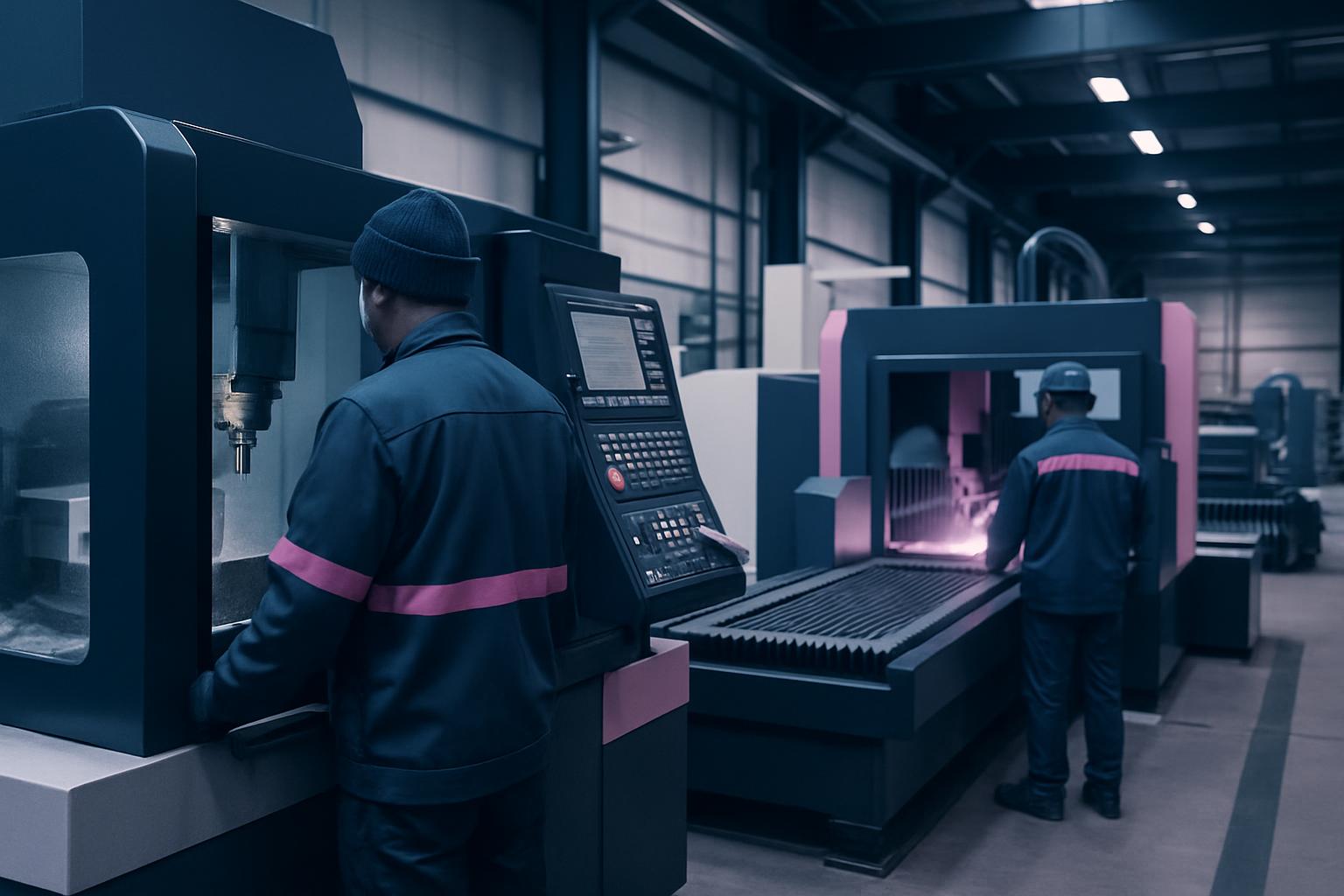
We set up the light metal bay around the Feature Fibre Laser for crisp, permanent marking of serials and logos, and the Feature Plasma Compact for fast, accurate cutting of mild steel, stainless and aluminium up to light gauge. Pair these with a Feature Dust Cell for fume and fine dust extraction, especially where the bay is next to other workstations or in a school environment.
Fixtures matter: a shear square fence helps with safe blanking from sheet, while a torch height lock for the plasma table gives consistent pierce and finish quality. A labelled collet tray or insert shadow board keeps cutters and consumables in order and easy to check at a glance.
Most teams batch cut common panels or brackets, queue marking jobs and finish with minimal secondary deburring. Consistency matters more than speed, especially when clients need reliable part numbers or logo quality every time.
Before the week starts, check that all machines are oiled and covered, especially in coastal shops. Confirm that extraction filters are in place. Run a dry test of the fibre laser's mark field, plasma air supply and torch height control. Keep a backup of essential settings and load the correct programme files on a USB stick to avoid delays if the PC or controller restarts after a power cut.
A common error is underestimating the need for clean, dry compressed air: moisture ruins plasma consumables quickly and causes poor cuts. In coastal or humid areas, failing to oil and cover rails leads to rust, which shortens machine life and cuts accuracy.
Another trap is letting dust and fumes build up between shifts. Do not rely on sweeping or compressed air alone; extraction at the source is required under the Hazardous Chemical Agents Regulations. Always re-home CNC axes and re-check work zero after a power cut to avoid scrap and wasted sheet.
Verified Google reviews