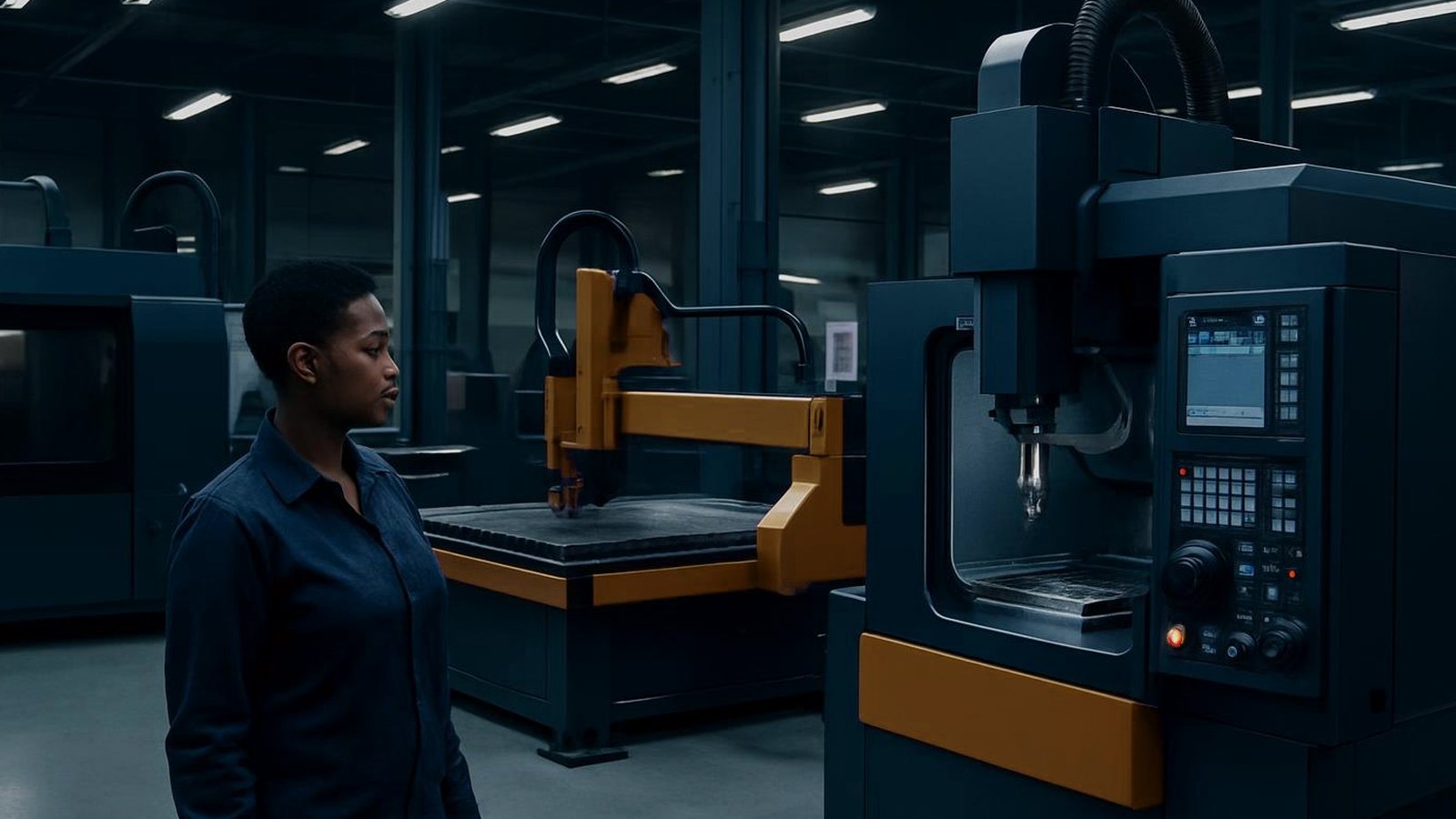
Fibre laser cell
Feature Fibre Laser is a compact fibre laser marking cell for fast, permanent marks on metal parts, tools and tags. Ideal for serials, asset IDs and logos up to 150 mm field size.
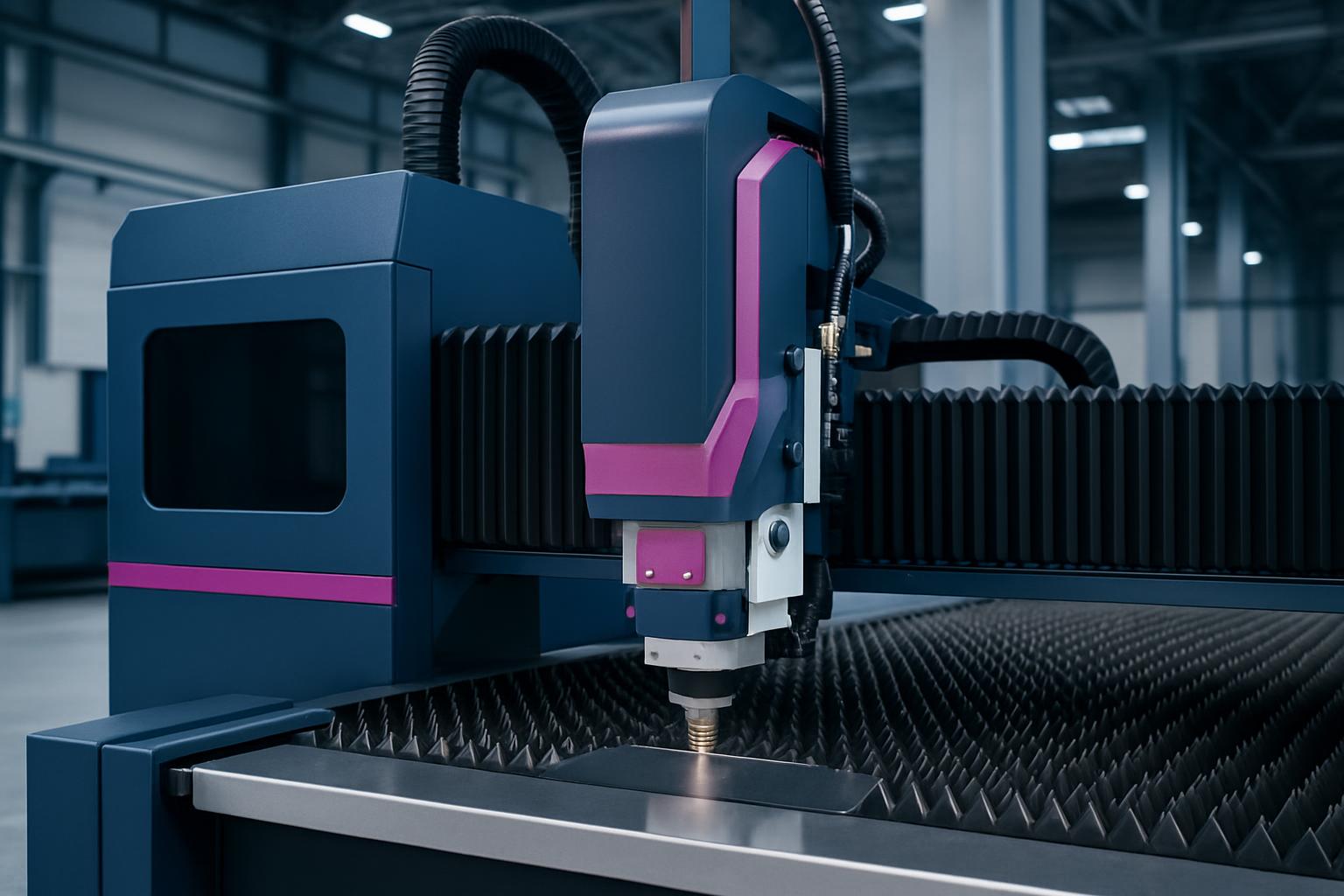
Marking bays choose the fibre cell when serials, logos, and light cut cues must stay readable on steel and anodised parts.
| Source | Fibre class |
|---|---|
| Mark field | Up to 150 mm |
| Fume | Stub + filter cue |
| Ideal for | Mark + light metal |
| Lead | Stock Gauteng |
| Care | Lens + nozzle |
Feature Fibre Laser is built for permanent marking of metal parts, tools, tags and plates in a busy workshop. This cell uses a fibre class source, working in the near-infrared at about 1064 nm, to produce clear, durable marks that withstand handling, solvents and weather.
It fits on a benchtop and is controlled via USB, making it practical for everything from small-batch serial marking to daily asset ID or logo work. With a mark field up to 150 mm, you can process a broad variety of part sizes without constant realignment.
This cell is ideal for light metal marking on stainless steel, mild steel, aluminium and anodised or plated surfaces. It works well on tags, plates, machine components and tools that need permanent, legible information. Fibre lasers are not for deep engraving or heavy cutting, but are perfect for marking serials, QR codes, asset numbers, compliance plates, personalised equipment and branded logos.
It is a good fit for technical schools, job shops, fabrication plants, sign makers and anyone needing reliable part traceability. The enclosed fume stub and filter cue help manage smoke and metal vapour, which is important for both staff safety and compliance with the Regulations for Hazardous Chemical Agents.
You will need a stable bench or stand with enough space to support the cell and allow safe access for loading and unloading parts. The cell runs on standard 230 V single-phase power at 50 Hz, as per South African supply. For new circuits or plug points, use a registered electrician who will issue a Certificate of Compliance as required by SANS 10142-1.
Plan for fume extraction: the supplied filter stub is suited to most small jobs, but venting outside is better for frequent marking. There is no need for compressed air, but keep the machine bay clean and dust-free to protect the optics and lens. Tooling is straightforward, usually clamp fixtures or a simple tray to hold parts steady.
A Joburg toolroom needed to serialise batches of 100 mild steel asset tags for plant equipment. They set up the Feature Fibre Laser on a sturdy bench with its stub filter positioned by an open high window, and plugged into a marked 230 V socket with a UPS for the controller in case of power cuts.
Using a clamp tray, operators loaded five tags per cycle, marking serials and QR codes in under two minutes per batch. After each run, they wiped the lens with a dedicated optical cloth to keep the beam clear. The permanent marks resisted solvents and light scratching, meeting the workshop's audit requirements without outsourcing or hand engraving.
The most frequent early issue is marks coming out faint or patchy, usually from a dirty lens or incorrect focus height. Clean the lens regularly and double-check your focus before starting a run. At the coast, keep the enclosure dry and wipe down any bare steel to prevent rust on rails and guides.
Power cuts can interrupt marking jobs: protect the controller with a UPS and always re-home axes, then check your work zero after power returns. Do not bypass the fume filter, as metal dust and vapour must be captured at source to comply with chemical agent regulations. Never run the laser with the shield open unless you have IEC 60825-1 rated safety glasses for 1064 nm.
Verified Google reviews