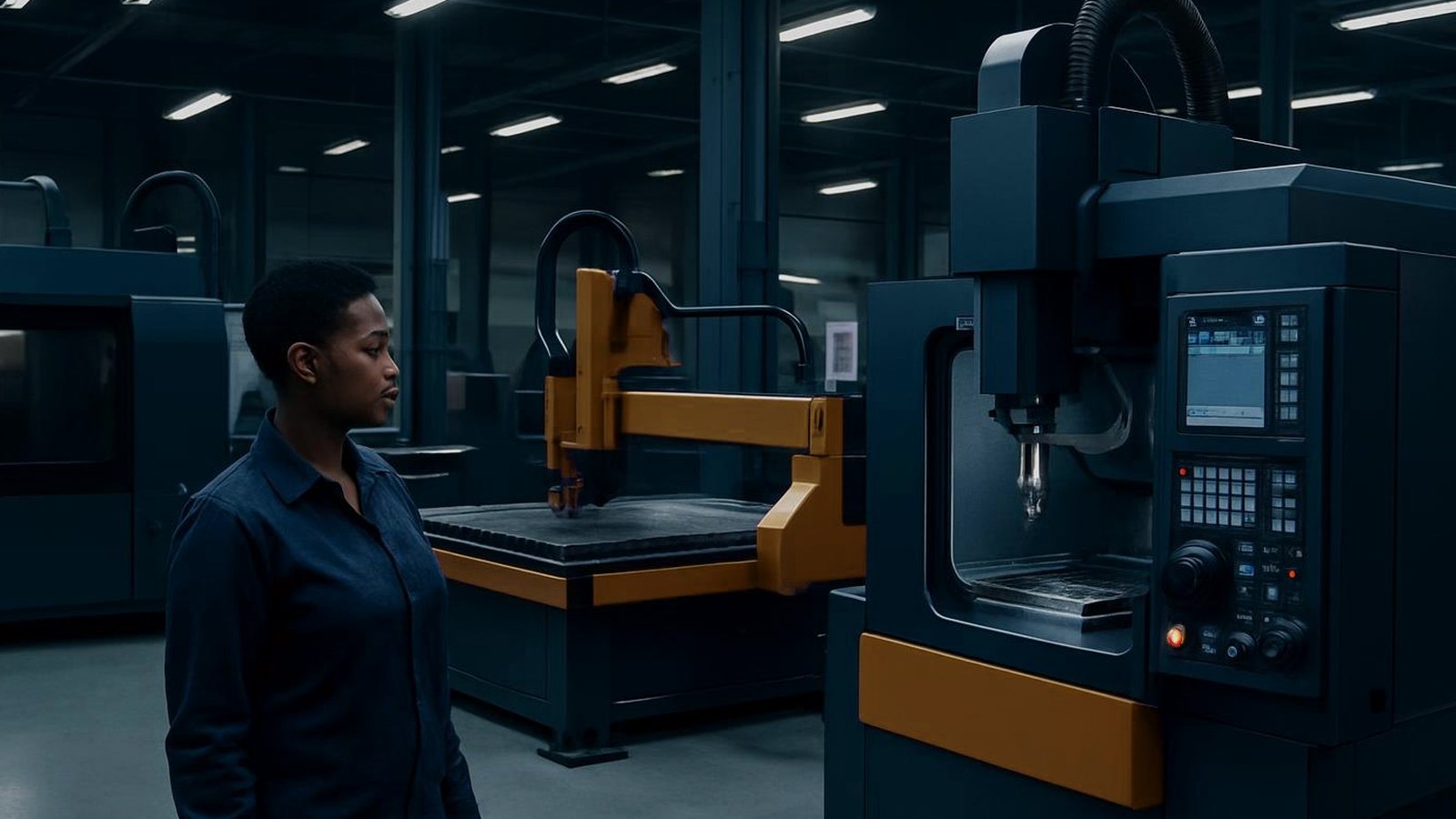
CNC lathe
Feature Lathe Compact is a CNC lathe for shafts, bushes and repair jobs that need quick turnaround without the footprint of a production cell.
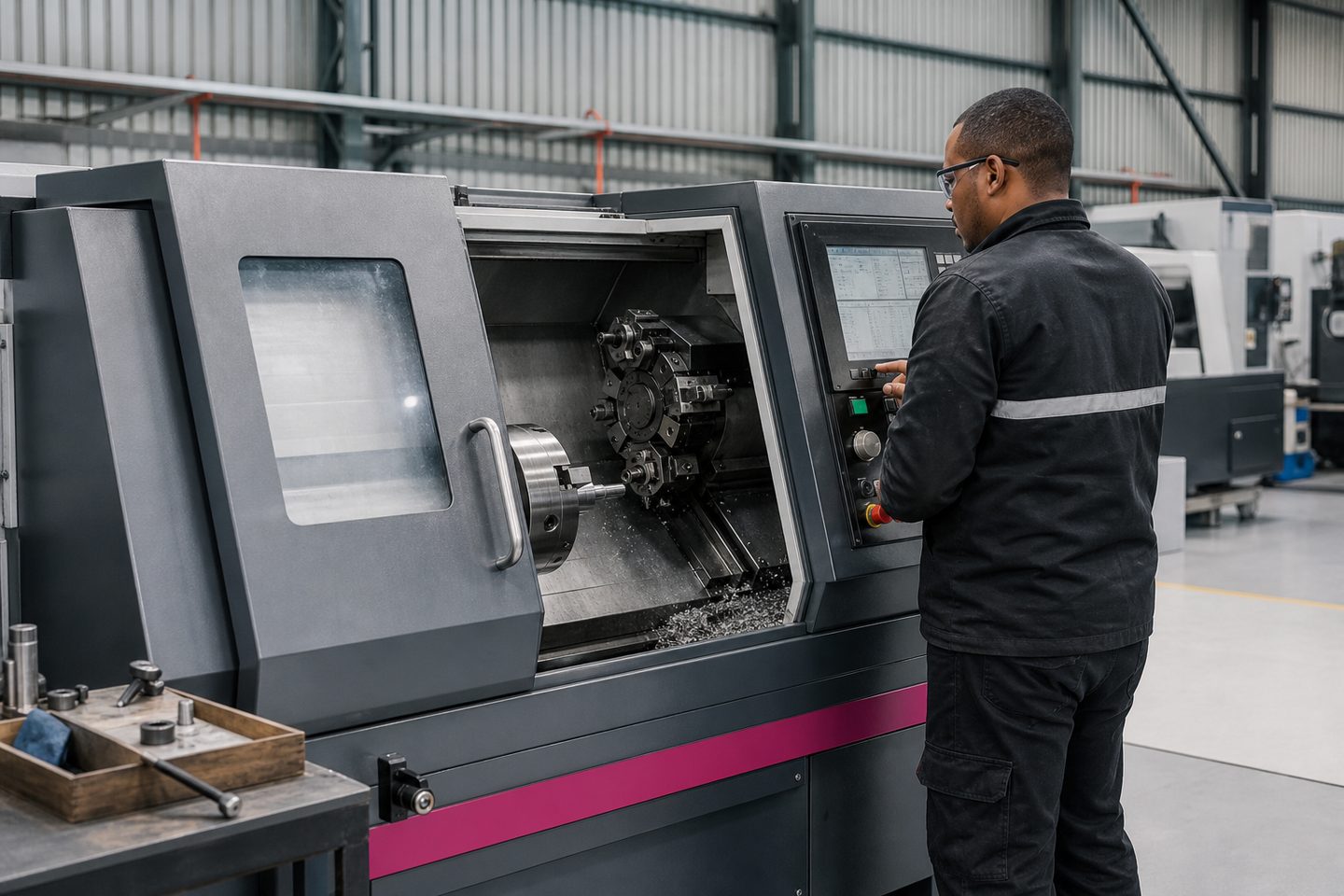
Repair and job shops pick the lathe when bushings and shafts cannot wait for an outside cell.
| Swing | Compact |
|---|---|
| Chuck | 3-jaw class |
| Tailstock | Live centre cue |
| Ideal for | Repair, shafts |
| Lead | Stock Gauteng |
| Care | Ways + chuck |
Feature Lathe Compact is built for South African workshops needing a space-efficient CNC lathe for shafts, bushes, threaded parts and urgent repair jobs. The three-jaw chuck handles a range of round and short workpieces, while the live centre in the tailstock gives support for longer shafts and keeps them running true.
This machine suits job shops, plant maintenance teams, automotive rebuilders and anyone who must turn small batches or one-off spares quickly. It helps you keep key repairs in-house, reducing downtime and courier costs when a critical shaft or custom bush fails.
It does not try to be a high-volume production cell, but it is practical for most of the day-to-day turning you see in plant workshops, fabrication support and technical school training facilities.
Feature Lathe Compact is built for common workshop metals like mild steel, stainless, aluminium, brass and engineering plastics. The sturdy 3-jaw chuck takes round stock for bushings, sleeves, support rollers and repair spares, while the tailstock live centre lets you turn shafts up to the bed’s supported length.
Most shops use this class of compact CNC lathe for diameters up to about the size of a typical motor shaft or pulley boss. It is not for turning large flywheels or industrial pump housings, but it covers the bulk of breakdown and plant spares, bushings, pins and bearing fits.
If you often need to machine abrasive or dusty materials, the ways and covers should be cleaned down daily to avoid grit wear and binding.
You’ll need a flat, level floor surface that can take the machine’s footprint and weight. Feature Lathe Compact runs on typical South African 400 V three-phase supply at 50 Hz. Make sure you have an isolator nearby and that installation is done by a registered electrician who issues a Certificate of Compliance, as required by law.
No built-in dust extraction is needed, but regular swarf removal is key. Compressed air is useful for chip clearing, but never for blowing fine dust, use a brush or vacuum. Tooling setup is straightforward: keep a tray for your turning and boring tools, and soft jaws for jobs that need custom gripping.
A pump shaft comes in from a factory near Joburg, worn and pitted at the bearing seats. The foreman roughs it down in the Feature Lathe Compact, clocks the shaft with the live centre, and takes a finishing cut to size. The shop can then press on a new sleeve and polish to fit. Turnaround is hours, not days, with everything kept in-house.
Schools and training centres use this lathe for teaching basic CNC turning, concentricity checks and safe workholding. It covers the practical work needed for QCTO Fitter and Turner training and similar trades.
In the first months, the most common issues are swarf buildup around the chuck and ways, missed lubrication, or minor knocks from loading heavy workpieces. Set a simple routine: wipe down the chuck jaws, oil the bed ways, and empty the swarf bin daily. At the coast, protect exposed metal with a light oil after each shift to avoid rust.
Power cuts can interrupt a job. Fit a UPS to the controller and PC. After power returns, always re-home the axes and check your work zero to avoid crashes. Make sure every operator is trained for safe clamping and use of the emergency stop, as required by the OHS Act.
Verified Google reviews