Tool crib
Feature Tool Crib is a dedicated storage and tracking system for CNC cutters, inserts, collets and fixtures on busy South African workshop floors.
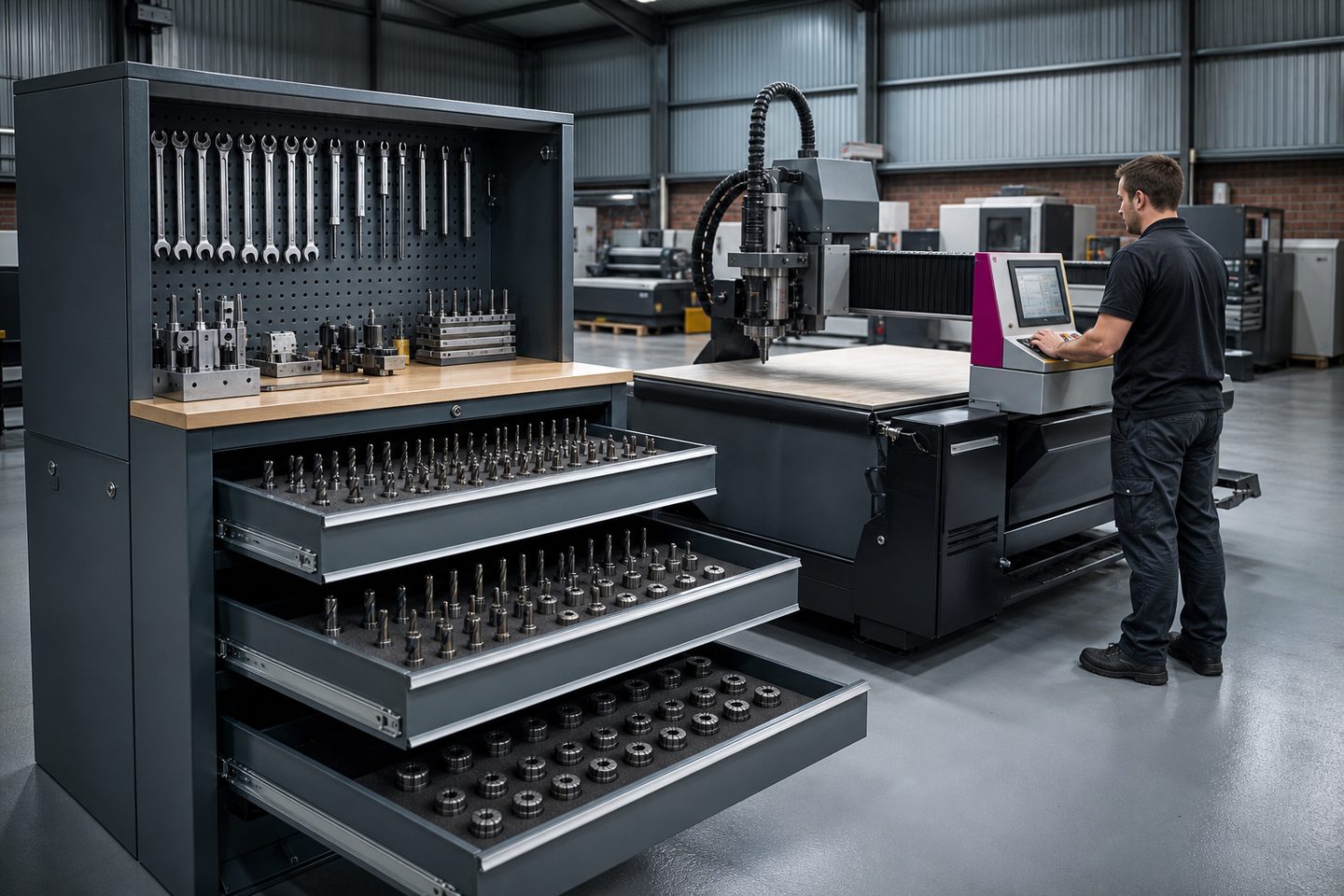
Feature Tool Crib is built for South African CNC and fabrication workshops where tools change hands, shifts overlap and quick access is essential. The system uses printed pegboards, labelled drawers and insert maps so every cutter, collet or fixture has a clear, assigned place.
It is aimed at busy floors: shared production bays, toolrooms, technical schools and maintenance shops where operators swap out inserts or collets under time pressure. Tool Crib helps you keep track of what is in use, what is missing and what needs care, reducing confusion at shift change or after a busy run.
The Feature Tool Crib is flexible: it can hold most common tools used in CNC routers, mills, lathes, plasma, engraving and waterjet bays. Typical items are end mills, V-cutters, inserts, ER collets, soft jaws, clamp trays and small fixtures.
Both standard and custom insert shadow boards can be set up, so you can map out tool positions for large face mills, fine engraving cutters or short-run jigs. The system is suited for high-rotation tools or accessories up to 500 mm in length and up to a few kilograms each, depending on drawer or board choice.
You do not need special power or air for the Tool Crib itself. Pick a dry, visible spot near your main workbays, away from welding spatter, grinding dust or waterjet splash. If your shop is coastal, keep boards and tags clean and dry to prevent rust and peeling.
Mount the pegboard securely to a wall or frame and make sure the drawers open fully. Use a label printer to update tags as tools or insert types change. For best results, keep a whiteboard or checklist for daily tool issue and return, and train operators on the mapped layout.
A cabinet shop in Germiston runs two Feature Routers and a Feature Engraver Pro. The manager sets up the Tool Crib next to the main router, with a pegboard for router bits, a drawer for ER collets, and a labelled shadow board for fixtures. Each tool’s place is mapped and tagged.
When the shift changes, the incoming team checks the crib: missing cutters are flagged, any broken inserts are logged and replaced, and collets are cleaned and returned. No time is lost hunting for the correct tool, and the process is simple enough for students or new hires.
The most frequent issues are mismatched or missing labels and poor enforcement of the check-in process. If operators just drop tools anywhere, maps and tags are ignored, leading to lost hours and damaged cutters.
Start with a clear, printed map and enforce a simple rule: nothing is left loose, and every tool is checked in and out. Update labels and positions as tooling changes. For busy shops, appoint a shift lead or senior operator to monitor the Tool Crib and address issues early.
Verified Google reviews