Bay
Run your router or mill in Gauteng or the Free State? Dust control is not a nice-to-have, it's survival for your team, your lungs and your machines.
Read the related specsheet notes and printable resources before you order.
If you run a CNC router or vertical mill in Joburg, Germiston, Polokwane or Bloemfontein, you know the Highveld brings dry air and fine dust that never lets up. Even in a closed machine hall, the dust works its way into rails, ways, electronics, and every open filter gap. It coats workpieces, toolholders and cutting tools, and clogs up cooling fans. Not only does it cause breakdowns, it puts operators at risk for respiratory problems if dust is left to settle or blown around with compressed air.
Teams often underestimate how quickly dust builds up, especially on MDF, hardwoods or engineering plastics. A couple of missed filter changes or a cheap extraction duct left open can fill a machine with enough fine dust to foul sensors and trigger emergency stops. If you rely on open doors for airflow or sweep up instead of filtering at source, you’ll struggle to keep up.
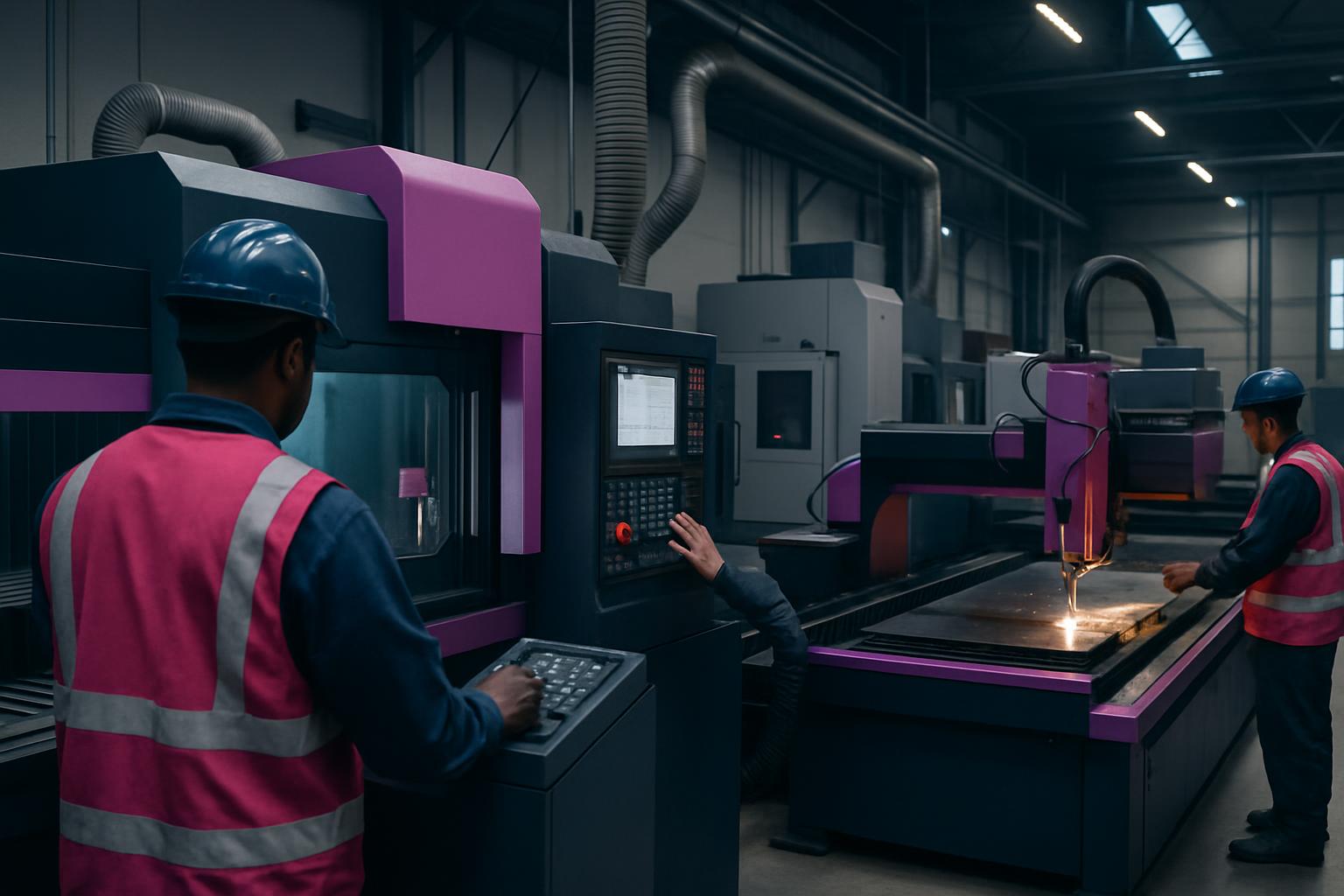
A typical Highveld dust bay uses the Feature Router 1212 and the Feature Mill 3-Axis. The Router 1212 handles sign foam, MDF, plywood or aluminium for cabinetry, shopfitting and custom fixtures, while the Mill 3-Axis suits prototypes and small production runs in aluminium or engineering plastics. Both need dry filtered air, clean vacuum beds, and tool drawers that keep cutters sorted.
We always pair these machines with the Feature Dust Cell for source capture. Its staged filters catch the fine wood and composite dusts before they reach your lungs or motors. Don’t forget a spindle kit for quick tool swaps, a labelled collet tray, and a filter stage pack for scheduled swaps. Dust gets into tooling too, so a Feature Tool Crib helps keep cutters, inserts and fixtures visible and protected.
Keeping these machines running smoothly means sticking to a clear routine. Inland dust creeps around even the tightest seals, so you have to treat dust capture as part of the production programme instead of a once-off clean on Friday.
Set up the Feature Dust Cell with the filter stage matched to your main material. Check the vacuum table pad for leaks and don’t let offcuts block it. Always wipe down rails, covers and pendant surfaces before each shift. Log every filter change and empty the extraction bins before they overflow.
We often see teams skip filter changes or put off extraction bin emptying until a machine trips on an airflow fault. Relying on open windows or sweeping up with a broom just moves the dust around, it doesn’t stop exposure or equipment fouling. Another mistake is forgetting to check the vacuum pad for leaks, which can reduce hold-down and make the job shift mid-cut.
Don’t let power cuts catch you out: use a UPS on your controller and pendant if you know Germiston or Boksburg is having outages. Always re-home axes and double check your work zero when power returns. It’s also easy to forget hearing protection once you get used to the shop noise, but over 85 dB(A) means PPE is not optional under the regulations.
Verified Google reviews