Vertical mill
The Feature Mill 3-Axis is a compact vertical CNC mill for prototyping, fixtures and short-run production where floor space and speed of setup matter.
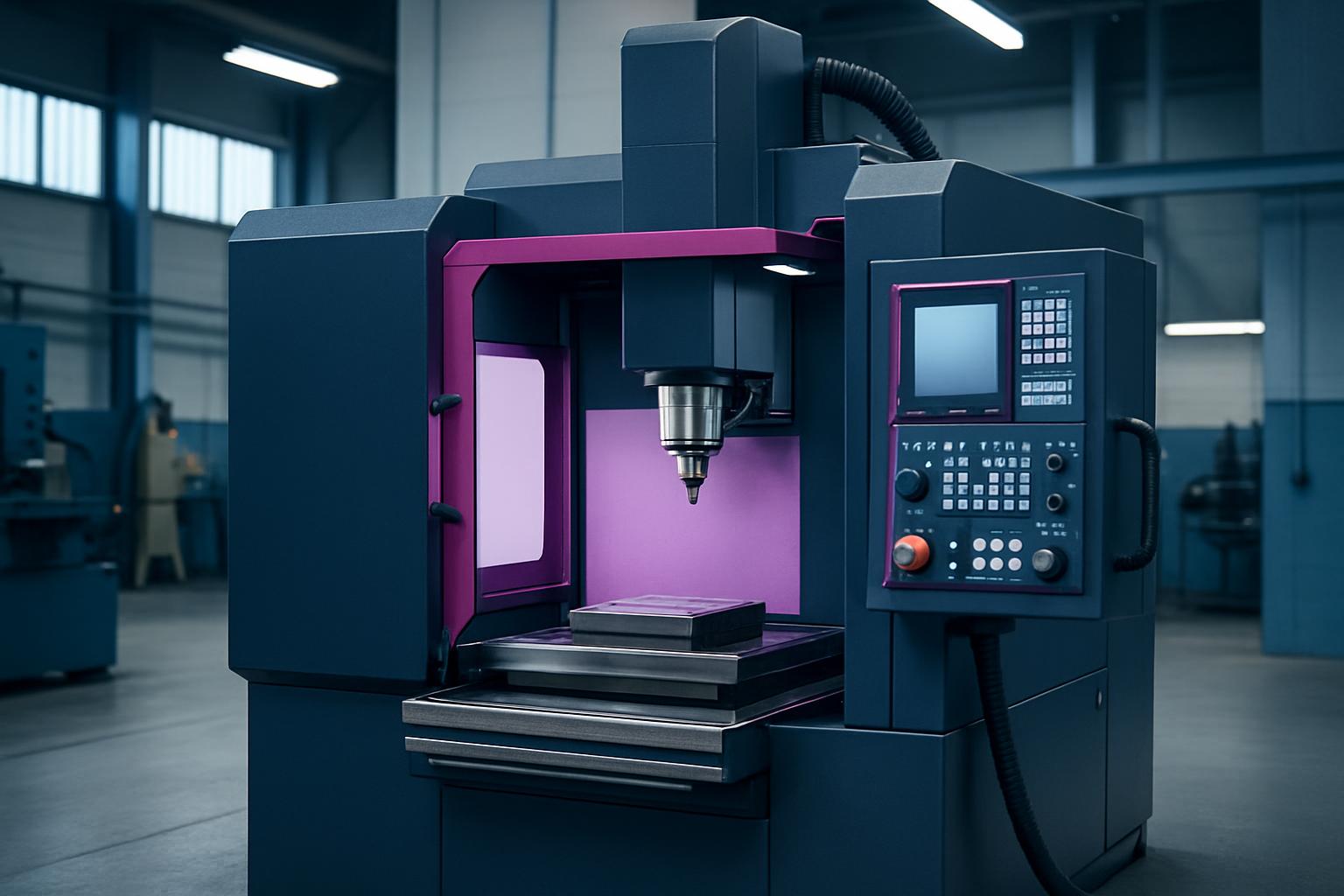
Prototype bays choose the mill when fixture plates and short aluminium runs must leave the same week.
| Travels | Compact class |
|---|---|
| Spindle | BT30 / ER |
| Coolant | Flood / mist cue |
| Ideal for | Fixtures, proto |
| Lead | Stock Gauteng |
| Care | Ways + coolant |
Feature Mill 3-Axis is a small-footprint CNC vertical machining centre designed for workshops making fixtures, prototypes and short runs. It is ideal for teams or owner-operators who need to move quickly from CAD file to finished part and who deal with multiple setups in a working week.
With BT30 or ER spindle tooling and a coolant system that handles both flood and mist, it is suited to local job shops, training centres, and technical schools. This machine is about flexibility and fast change-overs, not high-volume steel production. It fits well in Gauteng, Durban, Cape Town or Bloemfontein where space and power may be limited.
Its compact travels suit workpieces up to about A3 paper size or smaller. This covers most fixture plates, jigs, brackets, small housings and prototype parts. The machine is at its best with aluminium, plastics, non-ferrous alloys and light steel jobs.
It is not intended for cutting thick hardened steel or full production runs of large automotive parts. Teams working on smaller assemblies, toolroom parts or education projects will find it practical and easy to retool for different jobs during the month.
You will need a stable, level concrete floor that can take the weight of the mill and reduce vibration. The South African supply is 400 V three-phase at 50 Hz: all new electrical work, including isolators and connection, must be done by a registered electrician with a Certificate of Compliance to SANS 10142-1.
Plan for extraction if you machine plastics, composites or materials that make fine or hazardous dust. For coolant, have a suitable drain or containment. The machine needs a clean power supply, a basic UPS for the controller and PC to handle power cuts, and compressed air if you use mist coolant or pneumatic fixtures.
Buyers should have at least one full set of BT30 or ER collets, vices and a range of cutters sized for aluminium or light steel. We can advise on starter tooling for your jobs.
A Germiston job shop uses Feature Mill 3-Axis to machine new fixture bases for their press brake. After solid-modelling the base in CAD, the operator sets up an aluminium billet, fits a BT30 face mill, and runs a facing cycle with mist coolant. Next, he switches to an ER collet and drills mounting holes and slots for T-nuts.
The whole job runs from setup to first part in under two hours, including a controlled controller shutdown and quick re-homing after a midday power cut. The team can move from bracket prototypes to a small batch of repeat parts without shifting large machines or calling a rigger.
Most problems in the first months come from power cuts, incorrect axis homing and poor lubrication. Always use a UPS on the controller and PC, and re-home the machine after any outage. Before running a job, check and re-zero the work offset.
Another frequent issue is dust buildup from dry cutting aluminium. Capture chips and dust at the source with regular cleaning and a dust extractor instead of sweeping. Keep the slideways and spindle oiled, especially in Joburg or coastal shops where dust and humidity can affect accuracy.
Flood coolant needs the tank kept clean and topped up. Mist coolant lines must be checked for blockages. Train every operator and record changes to machine parameters to comply with OHS Act requirements.
Verified Google reviews