Bay
South African coastal workshops face tough problems from salt, humidity and dust. This bay groups the right machines and workflows for teams in Durban, Cape Town and Gqeberha.

Read the related specsheet notes and printable resources before you order.
Workshops on the KZN coast, Cape Flats or in Gqeberha know that salt and humidity attack CNC equipment fast. Rust creeps onto bare ways and steel surfaces, and electrical cabinets pick up condensation. Even a week without proper cleaning or oiling can leave a machine sticky or pitted. Fine coastal dust and salt air clog filters and settle on moving parts, causing bearings and rails to wear quickly. If you’re running jobs in these conditions, you need processes to keep your machines more reliable between shifts.
Humidity also interferes with electronics, especially drives and sensors. Humid air means more frequent cleaning, and missed oiling or covering up can double your repair work. Downtime from stuck axis, blown controllers or rusted chucks costs far more at the coast than inland. Many teams learn the hard way that coastal climates demand extra discipline to keep machines productive year-round.
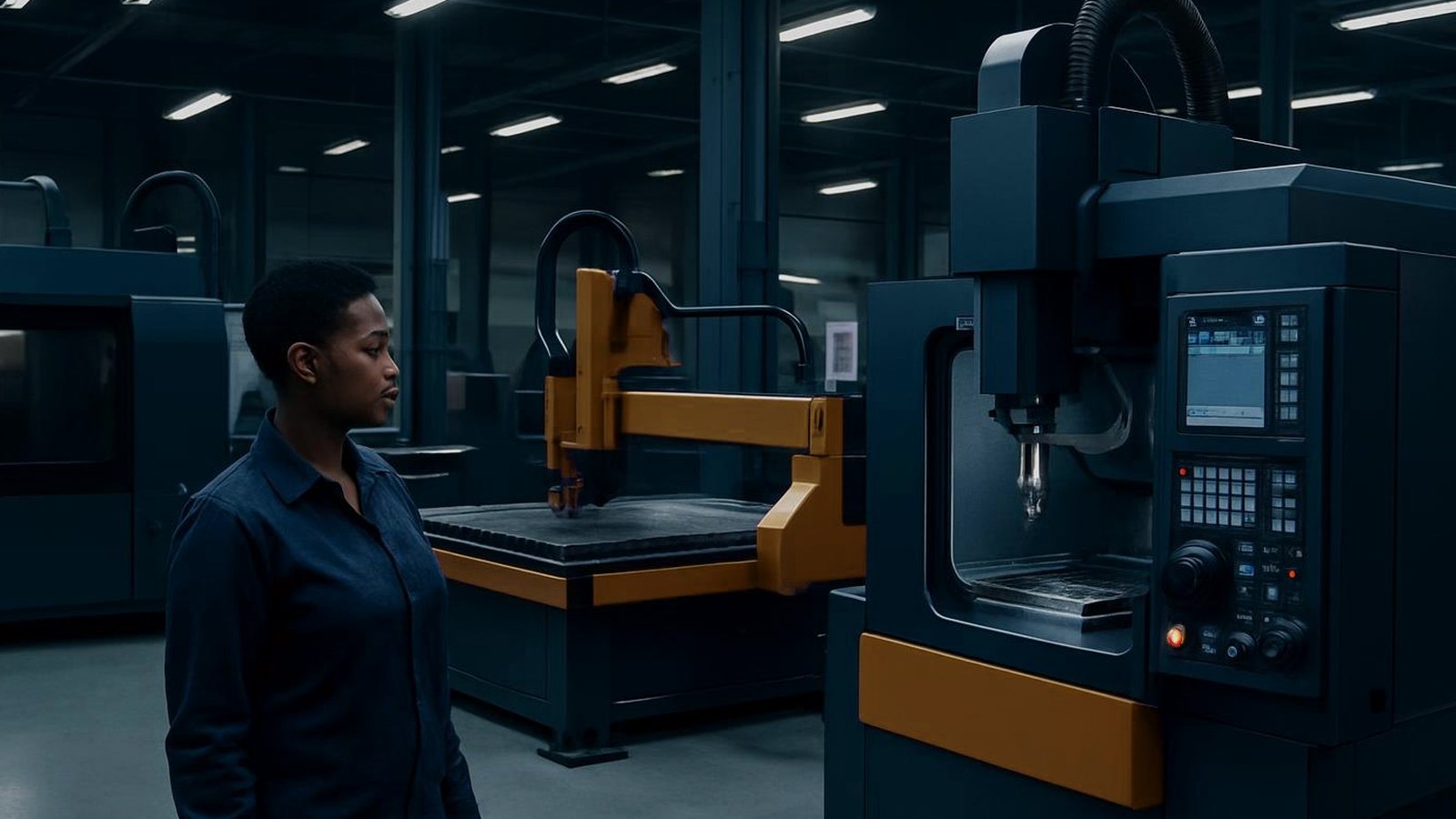
For coastal humidity bays, we recommend a mix that withstands salt and can be maintained easily. Start with the Feature Router 1212 for compact routing and signage, and the Feature Mill 3-Axis for fixture and prototype work. Both suit workshops needing versatility and are small enough to keep under proper covers and dehumidifiers overnight.
Add a Feature Dust Cell for staged dust and fume extraction, critical for controlling both wood dust and abrasive salt air, as required under hazardous dust regulations. The Feature Fibre Laser marking cell is suited for light metals and serials, and its closed cabinet helps protect optics from corrosion. For all, add the Feature Tool Crib for storing cutters and inserts off the floor and away from dust. Keep a set of spindle kits and spare filter stage packs ready to swap out before clogging becomes a problem.
A good weekly routine keeps coastal CNCs in top condition. Each Monday or after any power cut, check rails and ways for flash rust and wipe with machine oil. Inspect cable glands and electrical panels for condensation and dry out with a dehumidifier if needed. Run the Feature Dust Cell’s filter check at least twice a week, and clear any buildup before airflow drops.
At the end of every shift: brush off salt dust, re-cover machines, and put loose tooling back in the Tool Crib. Plan abrasive or wet work on waterjet or plasma away from electronics. Don’t let rags or chip trays sit damp overnight.
We see teams struggle when machines are left uncovered or with doors open overnight, letting salt air settle on steel and wiring. Another problem is skipping filter checks: once dust and salt cake up, extraction drops fast and fine dust settles everywhere. In coastal Gauteng and KZN, failing to oil rails or keep cabinets closed will cost you in rusted ballscrews and blown electronics.
Avoid running compressed air lines over salt-damp floors, which can draw in moisture and damage plasma or laser heads. Always keep filter stage packs and covers on hand, and train each operator to check machines for rust, dust and moisture as part of handover. Prevention is far cheaper than a major repair, especially at the coast.
Verified Google reviews