Shear
The Feature Sheet Shear is a guillotine-style machine for blanking mild steel sheets with straight, square edges, ready for further fabrication or assembly.
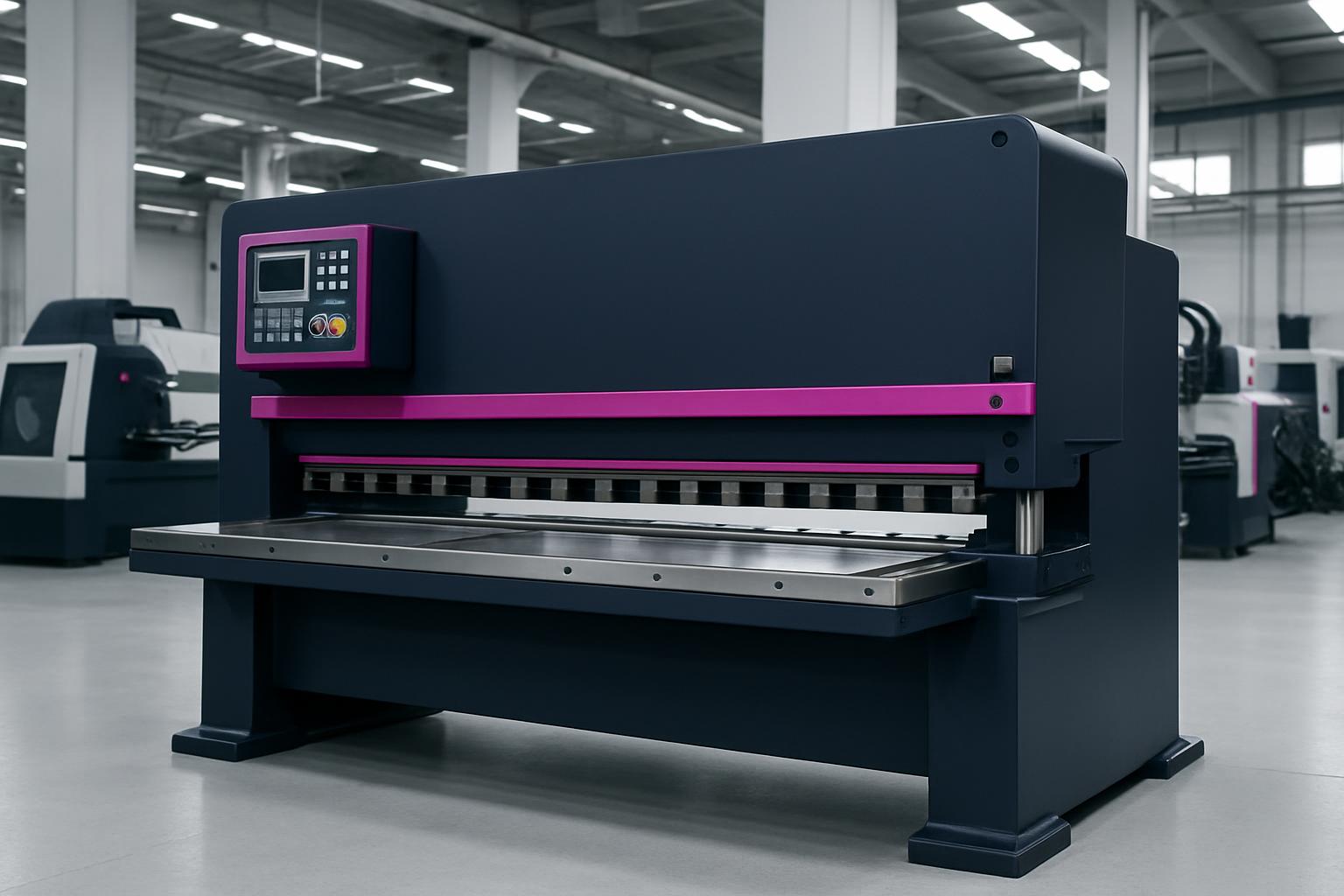
Prep bays pick the shear when blanks must enter routers and brakes without out-of-square stock causing trouble.
| Capacity | Mild steel cue |
|---|---|
| Gap | Blade card |
| Stop | Square fence |
| Ideal for | Prep |
| Lead | Stock Gauteng |
| Care | Blade oil |
Feature Sheet Shear is built for cutting mild steel sheet cleanly and square, making it ideal for prepping blanks in production, fabrication or maintenance bays. The square fence stop helps teams get repeatable, accurate edges every time, reducing waste and manual rework.
This machine fits best in environments where sheets need to be cut to size before going to a press brake, CNC router, mill or engraver. Its simple, sturdy action and clear controls make it a solid choice for small runs and daily prep work.
The shear is designed for mild steel sheet within its rated capacity. It handles typical sheet stock found in workshops and technical schools, but is not meant for stainless, aluminium, or anything over its stated gauge limit.
Common part sizes include panel blanks, bracket stock, signage backers and tray pieces. The square fence keeps cuts on line for downstream slotting, bending or assembly. For plate above the machine’s limit or jobs needing mirror finishes, rather use plasma or waterjet.
You will need a firm, level floor, enough working space for full sheet lengths and room to handle offcuts safely. A 230 V or 400 V supply is needed depending on model, and any new wiring must be signed off with a Certificate of Compliance by a registered electrician. Make sure there’s clear access for delivery teams.
This machine does not need compressed air or fume extraction, but keep the work area free of swarf to avoid slips and sheared edges. Use a marked pegboard or tray for the blade oil and maintenance tools, and keep the blade gap gauge close by for quick checks.
A Joburg sign maker receives a batch of 1.6 mm mild steel sheets. They use the shear to blank panels to exact size, feeding each piece directly to the Feature Press Brake Mini for bending. The square fence ensures every cut is true, cutting rework to almost nothing.
The operator oils the blades at the start of each shift, checks the gap once a week and records this in a log. Offcuts are stacked safely away from the foot area, and the workbench is kept tidy. The quick, square cuts mean no time wasted on grinding or straightening edges.
The most frequent early problems are off-square cuts and burrs. These are usually from a loose or misaligned square fence, incorrect blade gap, or not oiling the blades often enough. Check and tighten the fence before each batch and use the gap gauge every week.
Another issue is floor clutter and unsafe handling of offcuts. Make clear rules about where to stack offcuts and sweep up swarf. Keep hands away from the blade edge and check that all team members have basic training on the shear, as required by the OHS Act.
Verified Google reviews